
In-House Aluminum Billet Casting
At Regal Aluminum, our integrated manufacturing process begins at our own foundry. We specialize in melting and casting high-quality aluminum billets, the foundational material for all our extrusion products. With a production capacity of 1000 MT per month, we ensure a consistent supply of superior billets for any project.
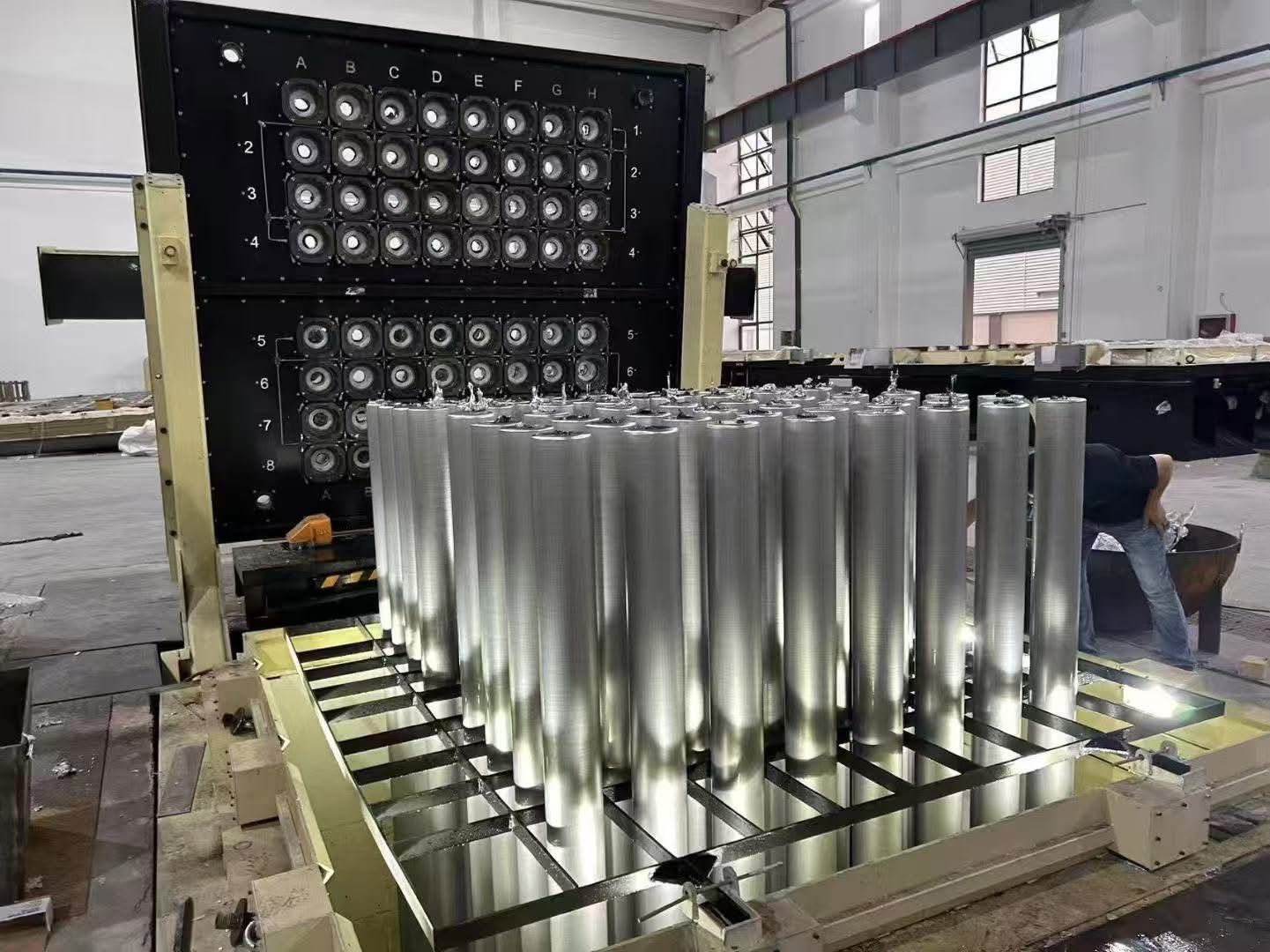
Our foundry is equipped with a state-of-the-art HOT-TOP continuous billet casting machine, which allows us to produce billets with exceptional metallurgical properties and a fine-grain structure. We produce billets in a range of alloys, primarily 6061, 6063, 6082 and all 6000 series, to meet diverse client requirements and application standards.
The Journey From Raw Aluminum to Perfect Billet
1. Raw Material & Melting
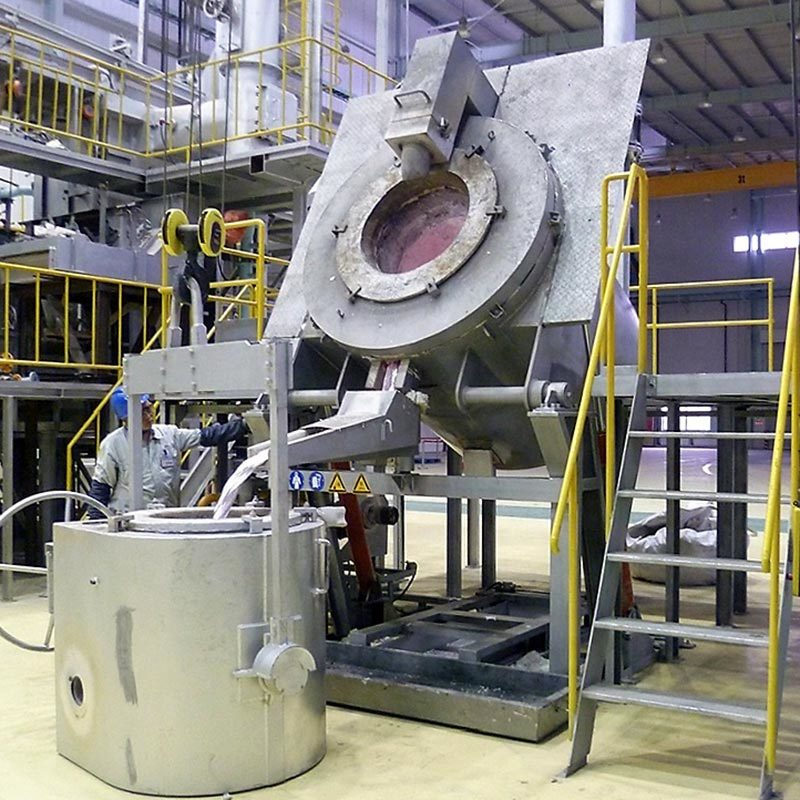
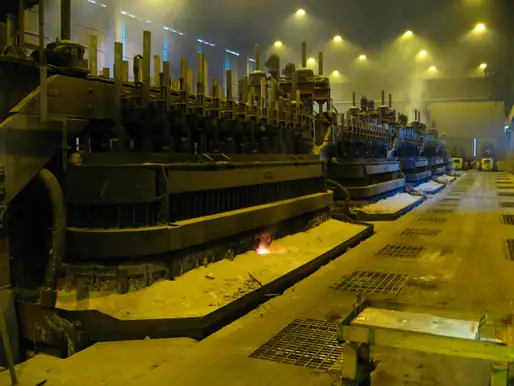
The process starts with melting high-purity aluminum ingots and scrap in our advanced melting furnace. We carefully control the temperature to ensure the metal reaches the ideal liquid state for alloying.
2. Alloying & Spectrometric Analysis
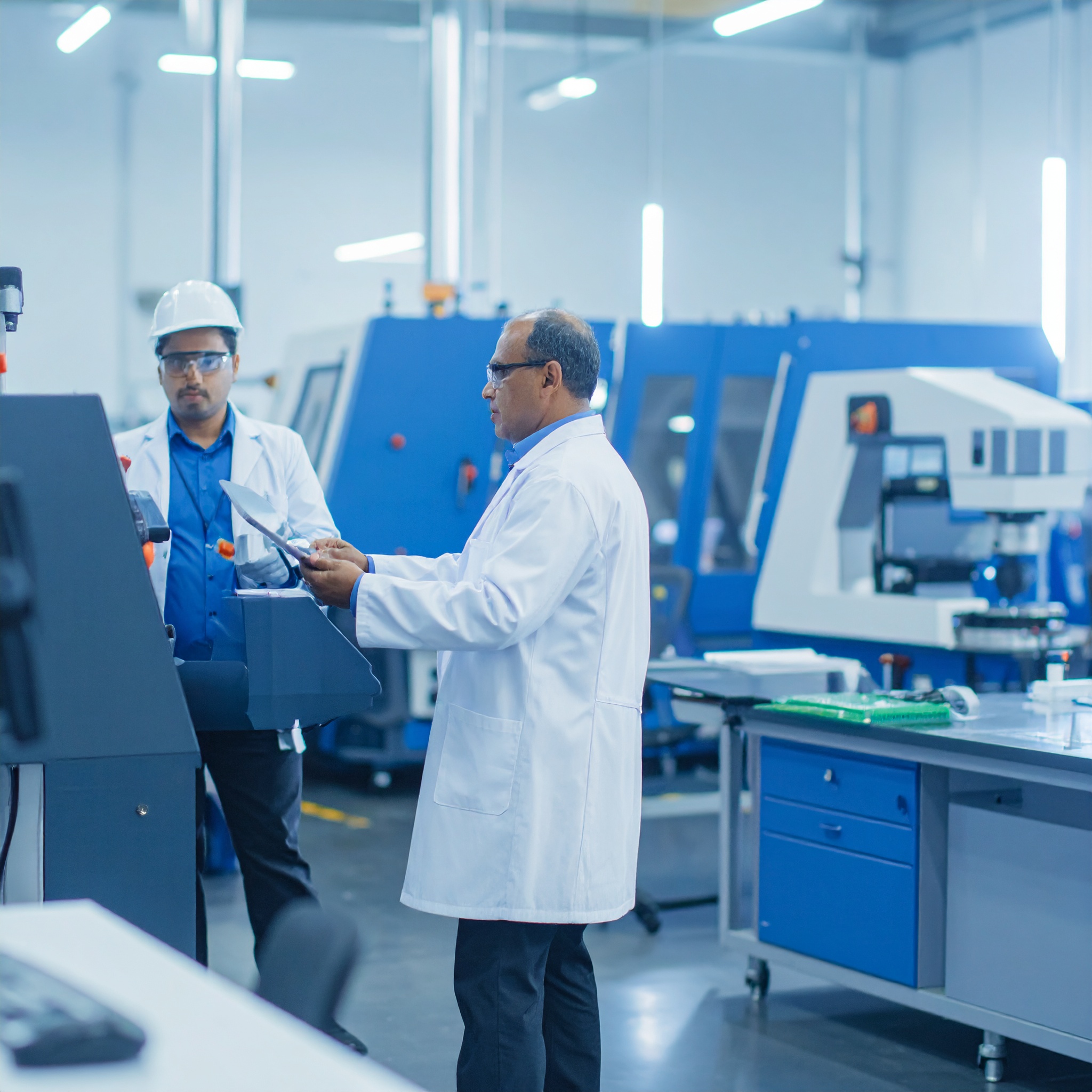
Precise amounts of alloying elements like magnesium and silicon are added to the molten aluminum. A sample is then taken to our lab and analyzed with a Spectrometer to verify the exact chemical composition, ensuring it meets the stringent standards for alloys like 6061, 6063, 6082 & all 6000 series.
3. Degassing & Filtration
To guarantee the highest internal quality, the molten metal undergoes degassing to remove dissolved hydrogen and is passed through a ceramic foam filter to remove non-metallic impurities. This crucial step prevents defects in the final product.
4. HOT-TOP Casting
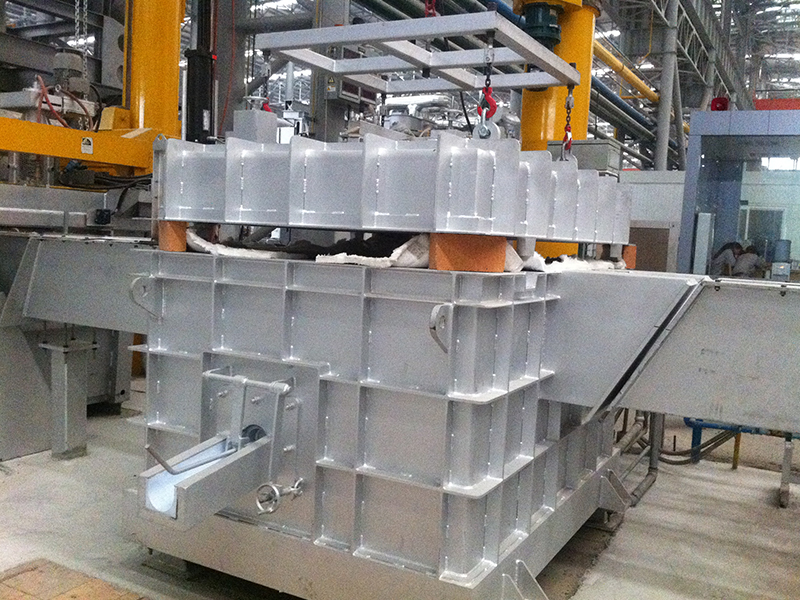
The purified molten aluminum is then cast into cylindrical logs using our HOT-TOP continuous casting system This technology ensures rapid and uniform solidification, resulting in billets with a fine grain structure and excellent surface finish.
5. Homogenization
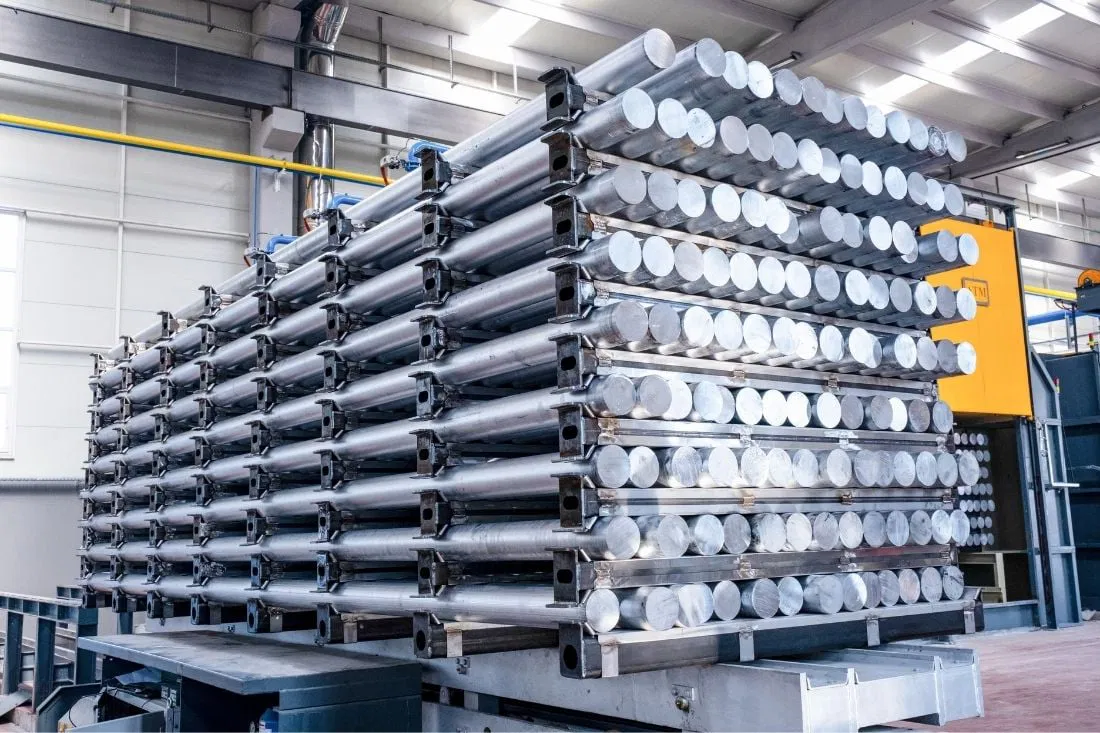
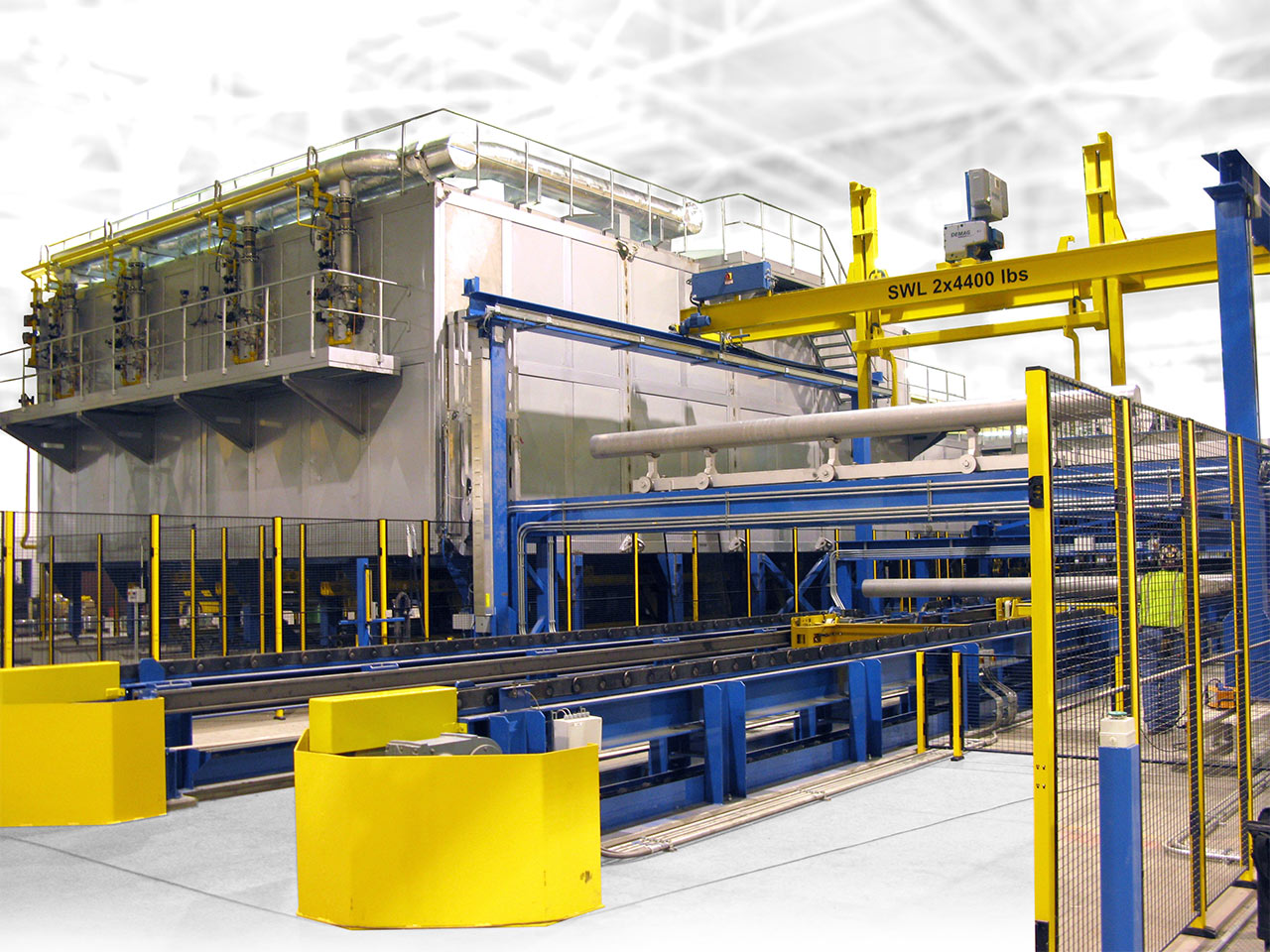
After casting, the billets are transferred to a homogenization furnace. This carefully controlled heat treatment process relieves internal stresses and ensures a uniform distribution of alloying elements throughout the billet, which is essential for consistent properties during extrusion.
6. Final Quality Testing
Every batch of billets undergoes a final, rigorous quality inspection. Our lab uses equipment like the UTS machine and Webster hardness tester to confirm that the mechanical properties meet the client's exact requirements and expectations before being approved for extrusion.