Extreme Hardness
The anodic layer is harder than the base aluminum, providing superior scratch and abrasion resistance.

Regal Aluminum is a fully integrated manufacturer of high-quality aluminum profiles and billets in Surat, India, committed to superior customer service and value-added products.
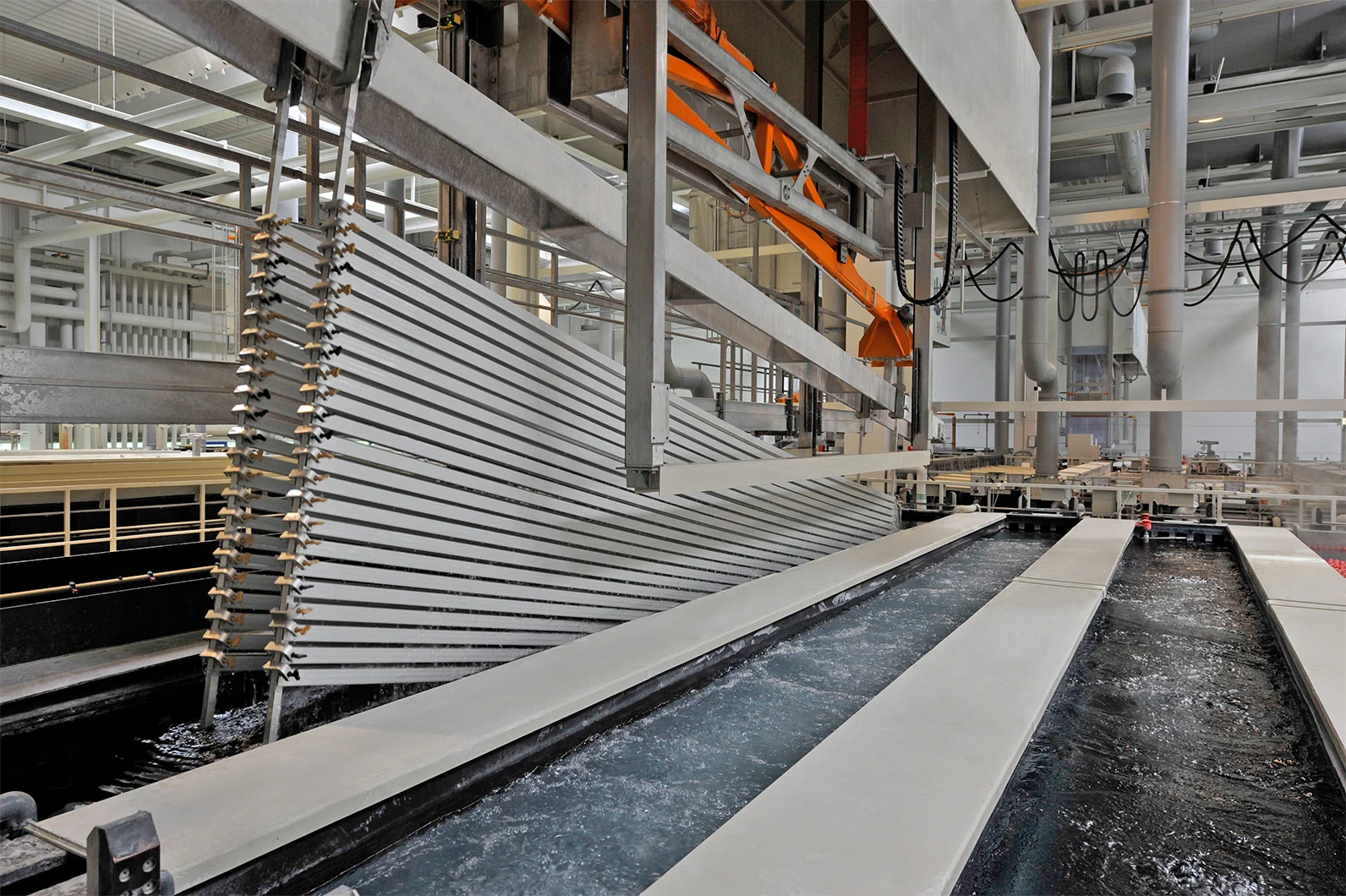
Anodizing is a highly effective electrochemical process that enhances the natural oxide layer on the surface of aluminum. Unlike paint or powder coating which sit on top of the material, the anodic layer is fully integrated with the underlying aluminum. This creates a finish that cannot chip, peel, or flake.
The process results in a porous oxide layer that can be colored, and is then sealed to create a surface that is incredibly hard, durable, and corrosion-proof, all while retaining the natural metallic luster of the aluminum.
The anodic layer is harder than the base aluminum, providing superior scratch and abrasion resistance.
The sealed, non-porous surface is impervious to moisture, weathering, and chemical attack.
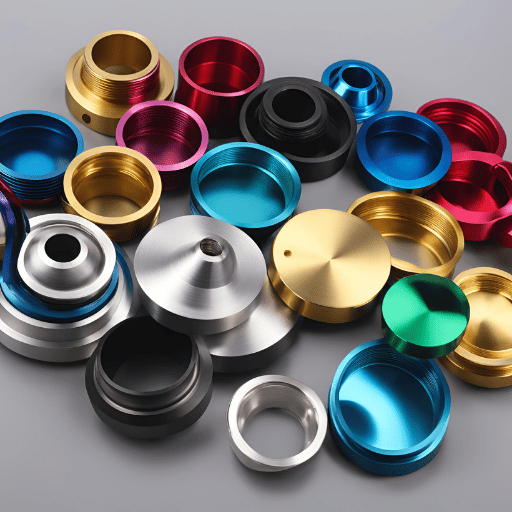
Anodized colors are fade-resistant even with prolonged UV exposure, making it ideal for exterior applications.
Anodizing enhances the natural metallic beauty of aluminum, providing a deep, rich luster that cannot be duplicated.
Profiles undergo a series of chemical baths to be thoroughly cleaned and degreased. They are then etched to create a uniform, satin-matte finish and de-smutted to remove any surface impurities, ensuring a flawless final appearance.
The clean profiles are immersed in a sulfuric acid electrolyte bath. A controlled electric current is passed through the aluminum, causing a thick, porous, and electrically non-conductive oxide layer to grow on the surface.
For colored finishes, the profiles are moved to a second bath containing inorganic metal salts. An AC current deposits these salts into the bottom of the pores. The final color depends on the specific metal salts used and the treatment time.
This is the most critical step for durability. The profiles are immersed in hot, de-ionized water. This hydrates the oxide molecules, causing them to swell and permanently seal the microscopic pores, locking in any color and creating a highly corrosion-resistant surface.